Diaper Caddy Essentials: Create a Calm, Cozy Changing Station at Home
Last Updated on 01/11/2026 by Nell Marie
There’s something comforting about having one little spot in your home that simply works—especially during those early days with a baby. A diaper caddy does exactly that. It turns diaper changes from a hurried scramble into something smoother and more manageable. Instead of hunting for wipes with one hand while keeping a wiggly baby in place with the other, everything you need is within reach.
When my boys were little, those middle-of-the-night changes felt endless. Having everything in one place meant I didn’t have to fully wake up or leave the room—I could tend to them quietly and get us both back to sleep faster. It was one of those small things that made a big difference in how the days (and nights) felt.
A well-stocked diaper caddy isn’t about looks or perfection. It’s about easing the small moments that happen again and again throughout the day. Whether you’re caring for a newborn or chasing a baby who’s learned to roll, having a simple system in place can bring a surprising sense of calm.
This guide will show you what to keep in your diaper caddy, how to adjust it as your baby grows, and how to keep it useful without letting it become cluttered. The aim is a practical, comfortable changing setup that supports you on even the busiest days.
More to read:
- The *Ultimate* Diaper Bag Checklist
- Bedside Cribs Compared
- The Best Baby Wraps for New Moms
- Dock-A-Tot Loungers
- *BEAUTIFUL* Aesthetic Gender Neutral Baby Gifts
Affiliate links may be used in this post and if so I will receive a commission at no extra cost. I’m also part of the Amazon Affiliate (Associate) program where I earn a commission from sales made through my affiliate links. Read the full disclosure policy.
What Is a Diaper Caddy?
A diaper caddy is a portable organizer—usually with compartments—that holds all your diaper-changing essentials in one place. Unlike a full changing table or dresser setup, a caddy can move with you from room to room. It can live on a dresser, a side table, a bathroom counter, or even the floor next to your couch.

It becomes your home base for diaper changes.
Instead of running upstairs for wipes or realizing the diaper cream is across the house, everything you need stays together. This is especially helpful during nighttime changes, postpartum recovery, or those long days when you’re moving between rooms.
A diaper caddy doesn’t need to be big. It just needs to be thoughtful.
The Core Diaper Caddy Essentials
These are the foundational items that belong in nearly every diaper caddy. They cover the basics so you’re never caught off guard.
Changing Basics
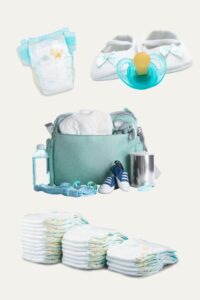
- Diapers (a small stack, not the whole box)
- Wipes
- Changing pad or mat
- Disposable diaper bags or wet bags
Skin Care
- Diaper cream or ointment
- Baby lotion
- Small towel or cloth for drying skin
- Cotton pads or soft wipes (optional)
Cleanup & Hygiene
- Hand sanitizer
- Tissues
- Paper towels or reusable cloths
- Disinfecting wipes (for surfaces)
Clothing
- One or two spare outfits
- Extra socks or booties
- Burp cloth or bib
These items cover nearly every diaper-related situation. Blowouts, spit-up, leaky diapers, and messy hands are all easier to handle when your tools are within arm’s reach.

Customizing Your Caddy by Age
Just like a diaper bag, your diaper caddy will evolve as your baby grows. Keeping it updated ensures it stays useful rather than cluttered.
Newborn Stage
Newborns require frequent changes and gentle care.
Helpful additions:
- Extra burp cloths
- Soft washcloths
- Saline wipes or cotton pads
- Swaddling blanket
At this stage, your caddy becomes a mini care station. Everything revolves around cleanliness, comfort, and quick access—especially during night changes.
Infant Stage
As babies grow, changes get messier and more active.
Consider adding:
- Teething toys
- Extra wipes
- Bibs for drool and solids
- Sunscreen stick (if near doors)
Babies start to grab and wiggle, so having a small distraction within reach can make all the difference.
Toddler Stage
Toddlers bring independence—and resistance.
Your caddy might include:
- Pull-ups or training pants
- Potty training wipes
- Sticker or tiny toy for encouragement
- Step stool nearby
At this stage, the caddy often supports transitions. It becomes a place that helps your child feel capable and included.
Where to Place Your Diaper Caddy
One of the best things about a diaper caddy is flexibility. You can create multiple stations or move one around as needed.
Popular spots include:
- Bedroom dresser
- Nursery changing table
- Living room side table
- Bathroom counter
- Near the crib for nighttime changes
Many families keep one primary caddy and a smaller secondary one in another room. This saves steps and keeps routines flowing.
Think about where you naturally spend your day. That’s where your caddy should live.
How to Keep Your Caddy Calm and Clutter-Free
A diaper caddy should feel supportive, not chaotic. The key is restraint and rhythm.
Use Small Sections Intentionally
Assign each compartment a purpose:
- Diapers in one section
- Wipes in another
- Creams grouped together
- Clothing folded neatly
When everything has a place, restocking becomes automatic.
Restock Once a Day
Choose one moment—morning or evening—to:
- Add diapers
- Replace wipes
- Swap dirty clothes
This tiny habit prevents that “Oh no, we’re out” moment.
Rotate What You Need
If you stop using something, remove it. A caddy should reflect your current season, not every season you’ve lived.
What You Don’t Need in a Diaper Caddy
It’s tempting to turn your caddy into a mini store aisle. But simplicity is your friend.
You can skip:
- Full-size bottles
- Every cream you own
- Large toys
- Extra blankets
- Items you rarely use
A caddy works best when it holds what you reach for daily. Everything else can live in a drawer or closet.
Creating a Cozy Changing Ritual
Diaper changes don’t have to feel rushed or stressful. With a gentle setup, they can become moments of connection.
A calm caddy allows you to:
- Keep one hand on your baby
- Maintain eye contact
- Speak softly
- Move slowly
These small moments build trust and rhythm into your day. Even on hard days, a familiar setup can ground you.
Adding a few cozy touches nearby—a soft lamp, a favorite song, a framed photo—can make this corner of your home feel like a peaceful pause instead of a chore.

In Closing
A diaper caddy isn’t meant to be perfect or Pinterest-worthy. It’s just a tool that saves you steps, time, and frustration. When everything you need is in one place, diaper changes become quicker and less disruptive—for you and for your baby.
The right setup will look different in every home. Some families use a small basket on a dresser, others keep one in multiple rooms. What matters is that it works for your routine. Stock it with what you actually use, adjust it as your baby grows, and don’t worry about making it complicated.
A well-organized diaper caddy won’t solve every hard moment, but it will make the everyday ones smoother—and that’s more than enough.